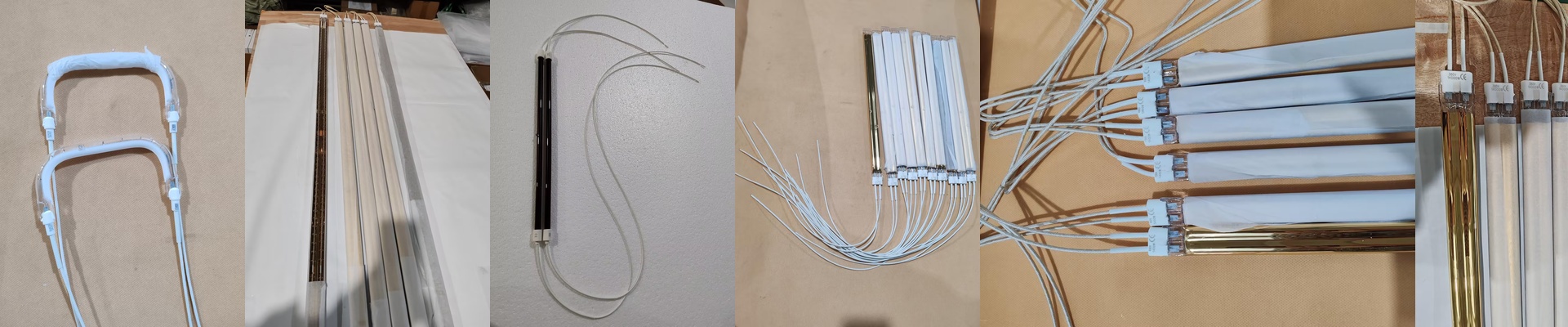

Why the Datasheet Lies About Your IR Lamps
Here is the truth about buying wholesale infrared lamps: the spec sheet is only half the story. You can find two lamps with the exact same voltage, wattage, and length, but once you plug them in on the shop floor? They act completely different. It’s frustrating. To actually know if a lamp is going to work, you have to look at two things: how fast it heats up and how even that heat is.
The “Heat-Up” Speed
Think of the temperature rise curve as the lamp’s acceleration. It’s basically just a measure of how long it takes for your part to go from room temperature to the heat you actually need. If the curve is steep, you’re hitting high heat fast. That’s a lifesaver for things like PET blowing or rapid curing lines where every second counts. But it’s a balancing act. If it’s too slow, your cycle times crawl. If it spikes too aggressively? You’re going to scorch your material. We spend a lot of time tweaking the filament density so the heat ramp feels predictable, not erratic.
The Headache of Hot Spots
This is where the cheap lamps usually fall apart. You’ve probably seen it—the middle of the tube is screaming hot, but the edges are barely warm. It usually comes down to sloppy filament winding or cheap quartz glass that doesn’t let the IR waves through evenly. It’s a nightmare for quality control. We map out the heat across the entire tube to make sure it’s flat. When the heat is consistent, you don’t have to worry about plastic sheets warping or coatings that cure unevenly. If you’re seeing cold spots in your current setup, your filaments are likely spaced wrong.
The Real-World Trade-offs
High-wattage tubes move a ton of heat, but they’re hungry. They put a lot of pressure on your power supply. Before you go big, double-check that your wiring and connectors can actually handle the current draw. Otherwise, you’re just waiting for a terminal to burn out. We’ll give you the raw thermal data so you can figure out exactly where to position the lamp. A few inches of distance can be the difference between a perfect finish and a ruined batch.