Why the Datasheet is Lying to You About Your Heating Lamps
When you’re picking out heating lamps for plastic processing, it’s easy to get hypnotized by the wattage and voltage numbers on a spec sheet. But here’s the thing: those numbers only tell half the story. I’ve seen plenty of engineers buy based on raw specs, only to find out the real performance depends on how the heat actually moves across the tube.
The Truth About the Temperature Rise
Think of the temperature rise curve as the “speedometer” for your material. If that curve is too steep, you’re basically searing the plastic. You get scorched surfaces or internal stresses that ruin the part. But if it’s too shallow? Your cycle times start to crawl, and you’re losing money every minute the machine is running. We spend our time obsessing over the ramp-up speed. The goal is to get the heat deep into the plastic wall without creating a nasty “hot spot” on the surface.
Dealing with the “Cold Spot” Headache
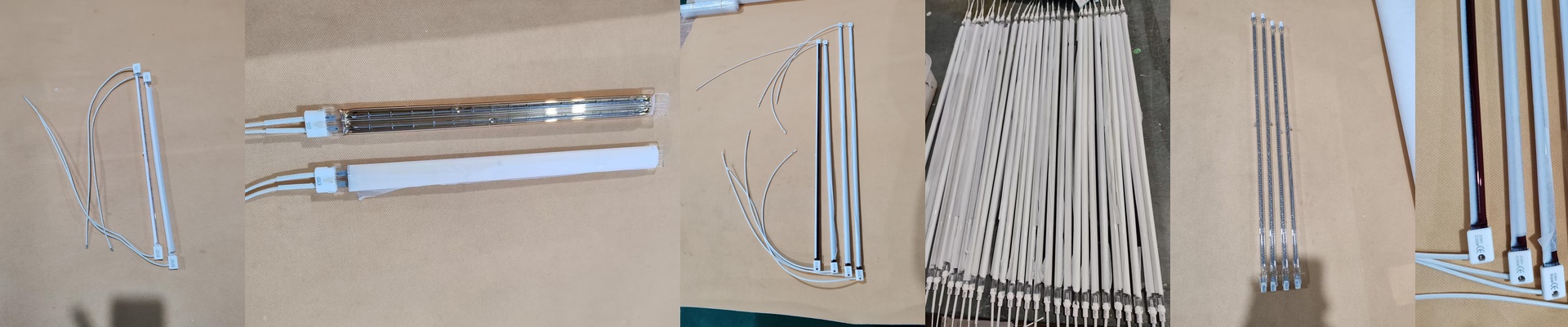
We’ve all seen it. You have a lamp that’s hot in the middle but drops off a cliff near the connectors. That’s “end-loss,” and it’s a nightmare for consistency. When your heat isn’t uniform, you get problems. Maybe it’s uneven wall thickness in your PET blowing or poor shrinkage during thermoforming. It’s frustrating because the lamp is “on,” but the part is still failing. To fix this, we tweak the filament winding and the quartz thickness. We want that heat curve to be as flat as possible. We actually benchmark this by measuring the surface temperature every 10mm. It’s tedious, but it’s the only way to be sure.
The Trade-offs (Because there’s always one)
Sure, you can push for higher heat density. It lets you use a smaller machine and speeds up your cycles. Sounds great, right? But there’s a catch. When you cram more watts into a shorter tube, you’re puting a massive thermal load on your wiring and reflectors. If your cooling fans aren’t up to the task, you’ll end up burning out your sockets way sooner than they should go. If you’re using Henruite lamps, I suggest a simple side-by-side test. Map out the thermal performance of our tubes against whatever you’re using now. The data usually speaks for itself—you’ll see exactly where you’re leaking energy.